

The CEO Who Fired Himself
Intel’s Turnaround and the Leadership Question That Changes Everything

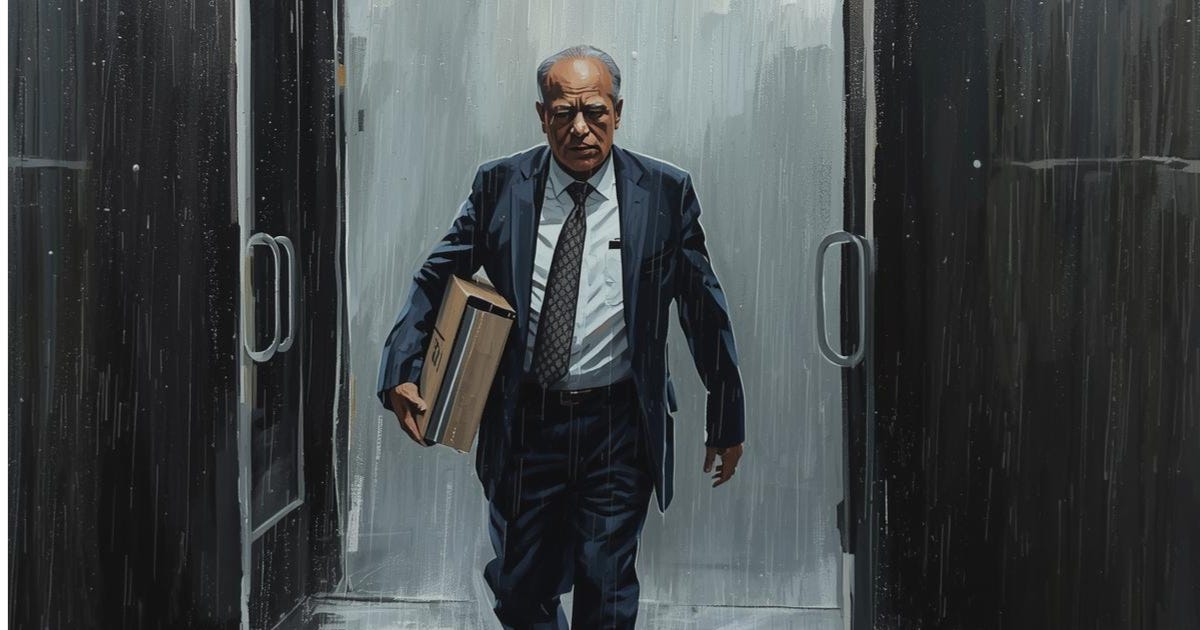
The Question That Saved Intel
The year was 1985. Intel dominated the memory chip market. But Japanese manufacturers had figured out how to make chips faster and cheaper. Intel’s margins collapsed. Losses mounted. The board was restless.
Andy Grove, President & COO, and Gordon Moore, Chairman & CEO, sat in Moore’s office, staring at the bleeding numbers. They had built Intel on memory chips. It was their identity. Their legacy. Their reason for existing.
Then Grove asked the question that would change everything:
If we got fired today and the board brought in a new CEO, what would they do?
Moore answered without hesitation:
They would get us out of memories.
Grove paused. Then he asked,
Why shouldn’t you and I walk out the door, come back, and do it ourselves?”
That question led to Intel’s eventual exit from memory chips. Intel pivoted and bet everything on microprocessors. The decision required significant layoffs, confused investors, and abandoning the market that had made them successful.
By the 1990s, Intel didn’t just survive the Japanese onslaught—it dominated its market. “Intel Inside” became one of the most recognized brands in the world. The company that almost died became the processor giant that powered the PC revolution.
But the real breakthrough wasn’t the decision itself. It was the question that made the decision possible.
The Behavioral Truth: Control is a Filter, Not a Force
Grove’s question worked because it did something most leaders avoid; it separated what they could control from what they couldn’t.
What Intel COULDN’T control:
Japanese manufacturing advantages
Global pricing pressure
Market commoditization
Intel’s past identity
What Intel COULD control:
Strategic focus
Product portfolio
Resource allocation
The decision itself
The Grove Question forced a mental reset. It removed ego, identity, and attachment from the equation. It made the uncontrollable visible—so they could stop wasting energy fighting it.
This is the core pillar of ESTABLISH in the Uncertainty E.D.G.E. Framework. To deal effectively with uncertain markets, you need to build a solid foundation. As part of that foundation, before you diagnose problems or take action, you must first be clear on what you actually control.
Most leaders skip this step. They try to fix everything. They burn energy on the uncontrollable. They rage against market forces, competitor moves, or customer behavior—things they cannot change.
Grove didn’t. He essentially asked: “What would someone without my baggage do?” That question revealed his real circle of control.
And that’s where clarity begins.
The Leadership Edge: Your Circle of Control
1. Most strategic failures begin with misplaced energy.
Leaders waste resources trying to control:
Competitor pricing
Market trends
Regulatory changes
Macroeconomic forces
Meanwhile, they neglect what they CAN control:
Strategic positioning
Resource allocation
Team focus
Decision speed
Narrative clarity
Intel couldn’t control Japanese manufacturing. But they could control how and where they competed.
2. Identity is often the biggest uncontrollable.
Grove and Moore weren’t just exiting a product line. They were killing Intel’s identity. “We ARE a memory company” was the internal narrative.
But that narrative was based on the past—not the future. And the future is uncontrollable.
Leaders who tie their identity to uncontrollables (legacy markets, outdated business models, how things “used to work”) trap themselves. They confuse who they were with what they can become.
Grove’s question severed that attachment. It asked: “What would someone without our history do?” That mental move freed them to act.
3. The Grove Question works because it removes ego.
“What would a new CEO do?” is a forcing function. It creates psychological distance. It removes:
Sunk cost bias (we’ve invested so much in memory chips)
Identity attachment (we ARE a memory company)
Loss aversion (exiting means admitting failure)
Ego defence (this was OUR idea)
By imagining an external actor, Grove made the uncontrollable visible. A new CEO wouldn’t care about Intel’s history. They would only care about Intel’s future.
That clarity revealed the decision hiding in plain sight.
4. Control is binary—but most leaders treat it as a spectrum.
You either control something, or you don’t.
You can influence competitors, but you don’t control them.
You can shape customer perception, but you don’t control it.
You can lobby regulators, but you don’t control policy.
Grove understood this. He didn’t waste energy trying to make memory chips profitable again. He accepted what he couldn’t control and focused on what he could — Intel’s strategic direction.
Leaders who blur this line exhaust themselves. They fight uncontrollables instead of redirecting energy toward controllable.
5. Before you diagnose, determine your circle of control.
Most strategic planning starts with “What’s the problem?” or “What’s the opportunity?”
Grove started earlier: “What do we actually control here?”
That’s the ESTABLISH step in the E.D.G.E. Framework:
Establish your Foundation, including your circle of control
Diagnose the situation objectively
Go with purposeful action
Evolve through continuous learning
If you skip ESTABLISH, you are not set up to diagnose the right problems. You create plans to fix things you can’t control. And when those plans fail, you blame execution—when the real issue was clarity.
Intel’s turnaround didn’t start with better strategy. It started with better boundaries.
The Insight: Clarity Starts with Control
Andy Grove didn’t save Intel by predicting the future. He saved it by asking a better question.
“If we got fired and the board brought in a new CEO, what would they do?”
That question revealed what Intel could control—and what they couldn’t. It separated identity from strategy. It removed ego from the equation.
And it gave Grove permission to act.
Most leaders skip this step. They jump straight to diagnosis (”What’s wrong?”) or action (”What should we do?”). They waste energy fighting things outside their control. They confuse activity with progress.
The Grove Question forces you to pause. To map your circle of control. To ask: “What would someone without my history see here?”
That clarity doesn’t guarantee success. But it’s the foundation everything else builds on.
Because if you don’t know what you control, you’ll never know what to do next.
My Own Grove Moment
I used the Grove Question when we built a brand-new wealth management business for a large insurance company. It was 2012, and the ravages of the Great Recession were still fresh in everyone’s mind.
Running an ultra-high net worth business at a different firm, I had witnessed billionaires panicking and rushing to sell at the height of the market panic in 2008. Clients who, just one year earlier, had confidently proclaimed that they were long-term investors and could handle any market volatility.
Building this new platform, we realized that we certainly couldn’t control markets. But we also couldn’t control client behavior in the moment of panic. Those were uncontrollables.
What we could control was how we created client portfolios and how we prepared clients for the inevitable market downturns ahead.
So we built a goals-based investing philosophy. We started with client goals first—not returns, not products, not market forecasts. But we didn’t just talk about the goals in abstract. We translated those goals into what it meant for the amount invested in each goal, the type of returns necessary to deliver that goal, the type of portfolio necessary to generate that kind of return, and what volatility the client could expect. We realized that talking about risk was abstract to most clients, but walking through the types of return necessary to achieve goals would get them to understand the inherent risks in a more tangible way.
Then we did something most advisors avoided: we asked clients at the very outset to imagine the worst-case scenario.
It’s six months from now. You open your investment statement to find that your portfolio is down 20%. How would you feel? What actions would you want to take in that moment?
We couldn’t control the next bear market. But we could control whether clients were prepared for it—emotionally, cognitively, and behaviorally. We helped them anticipate the downturn and create a rational strategy ahead of time to deal with what would be an emotional challenge of managing the fear of a market downturn.
This conversation didn’t eliminate panic. But it changed the frame. When markets eventually did fall, clients remembered that conversation and the plan we had put in place, that they had helped devise. They had already lived through the worst-case scenario in their minds. The fear was still there—but it wasn’t paralytic.
That’s the power of understanding your circle of control and Establishing your Foundation. You can’t control the storm. But you can control whether you have prepared for it.
Your Turn: Ask the Grove Question
This week, try this exercise with a decision you’re facing:
Step 1: Write down the decision or challenge.
Step 2: Ask yourself: “If I got fired today and someone else took over, what would they do?”
Step 3: Write down what you can control vs. what you can’t.
Step 4: Notice where you’ve been wasting energy on uncontrollables.
Step 5: Redirect that energy toward what you actually control.
You don’t need a perfect plan. You need a clear boundary.
Start there.
📖 Want the complete E.D.G.E. Framework? My book, The Uncertainty Edge: Lead with Clarity, Adapt with Confidence, Win with Conviction, talks about the Grove Question and other similar real-world examples. It gives you all the tools and frameworks to thrive in uncertainty. [Get your copy → ]
🎙️ Go deeper: Last week on The Uncertainty E.D.G.E. Podcast, I spoke with Jim Effner about the gap between what advisors try to control (market performance, client panic, competitive pressures) versus what they actually can control (their competence, conviction, and environment). Jim’s insight after 30 years building one of Northwestern Mutual’s largest offices? The Grove Question in practice means focusing your energy on mastering your craft and preparing clients beforehand—not trying to control their emotions in the moment of crisis.
The Uncertainty Edge is a bi-weekly newsletter for leaders navigating the tension between hesitation and haste. Subscribe for free to get frameworks, case studies, and decision-making tools delivered every other Tuesday.